
What is a Suspension Kit?
What is it ?
Suspension Kits are important components in a vehicle’s suspension system. They help connect major suspension parts and allow controlled movement between the wheels and the chassis. These components help maintain vehicle stability, absorb shocks from the road, and ensure smooth steering and handling.
Where it is found in a vehicle ?
The suspension kit is usually located within the vehicle’s suspension assembly. Depending on the design of the vehicle, it may be positioned between the wheel hub, control arms, struts, or chassis components. It works together with other suspension components to maintain proper wheel alignment and stability.
Usage and purpose
The primary purpose of a suspension kit is to support suspension movement while maintaining stability and alignment. It allows the suspension to move up and down over uneven road surfaces while keeping the wheel properly positioned. This helps improve vehicle handling, safety, and ride comfort.
Symptoms of wear or failure
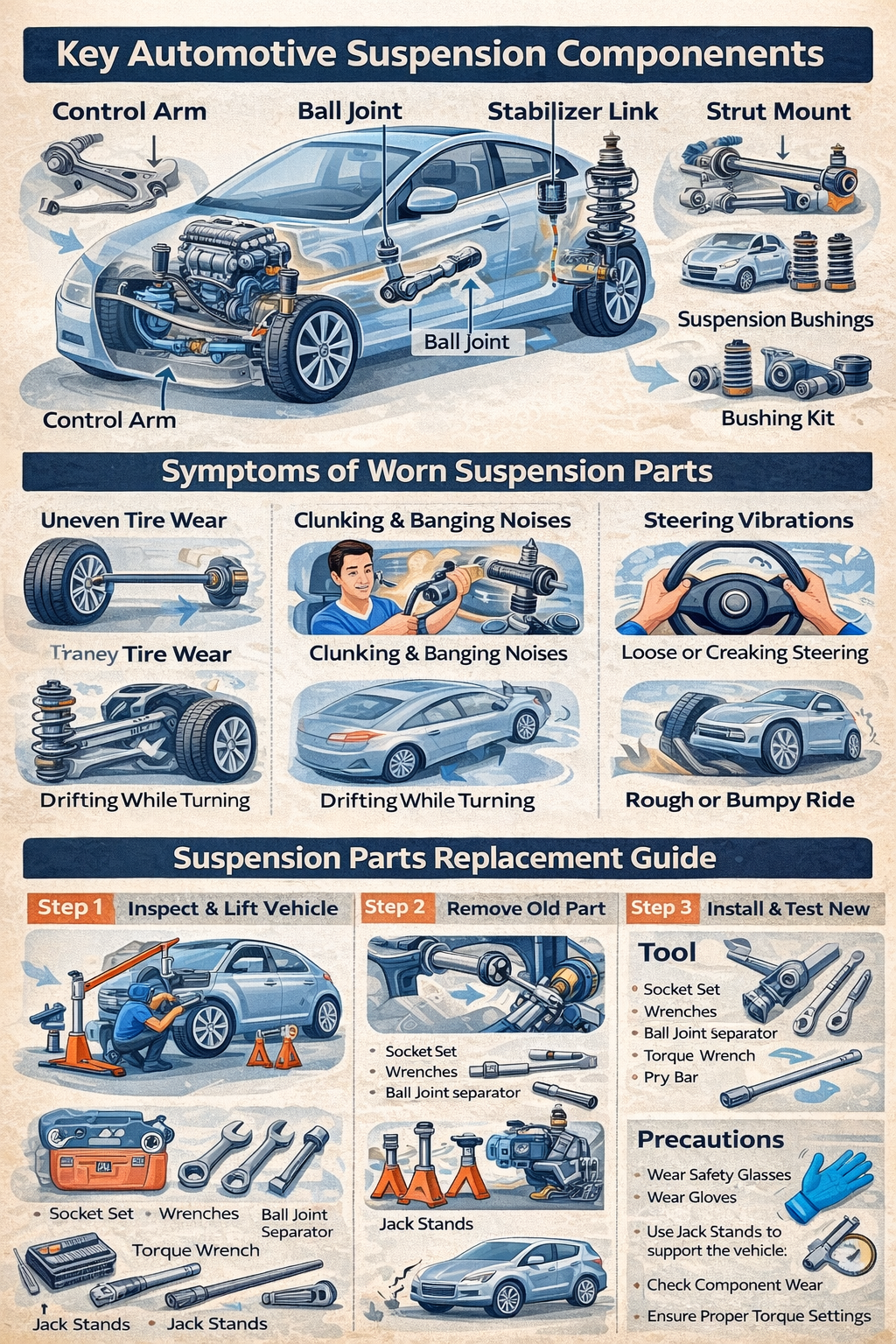
Common signs that a suspension kit may need replacement include unusual noises such as clunking or knocking sounds from the suspension area, uneven tire wear, poor steering response, excessive vibration, and instability while driving over bumps or during turns.
Tools required for replacement
Typical tools used when replacing a suspension kit may include a jack and jack stands, socket and wrench sets, breaker bars, torque wrenches, pry bars, ball joint separators (depending on the component), and sometimes hydraulic presses for bushings.
How to inspect it ?
Inspection usually involves visually checking the component for cracks, excessive play, damaged rubber parts, leaking hydraulic material (if applicable), or loose mounting points. Mechanics may also perform suspension movement tests to detect abnormal movement or noise.
Cost of replacement
The cost of replacing a suspension kit varies depending on the vehicle model, labor charges, and whether OEM or aftermarket parts are used. In most cases, the cost includes both the component itself and the labor required for installation.
Precautions during replacement
When replacing a suspension kit, the vehicle must be securely lifted and supported with jack stands. Mechanics should follow proper torque specifications, avoid damaging nearby components, and ensure that suspension alignment is maintained.
Basic replacement steps
Basic steps generally include lifting the vehicle safely, removing the wheel, loosening and removing the mounting bolts of the old component, installing the new suspension kit, tightening all fasteners to manufacturer torque specifications, and rechecking suspension alignment if required.