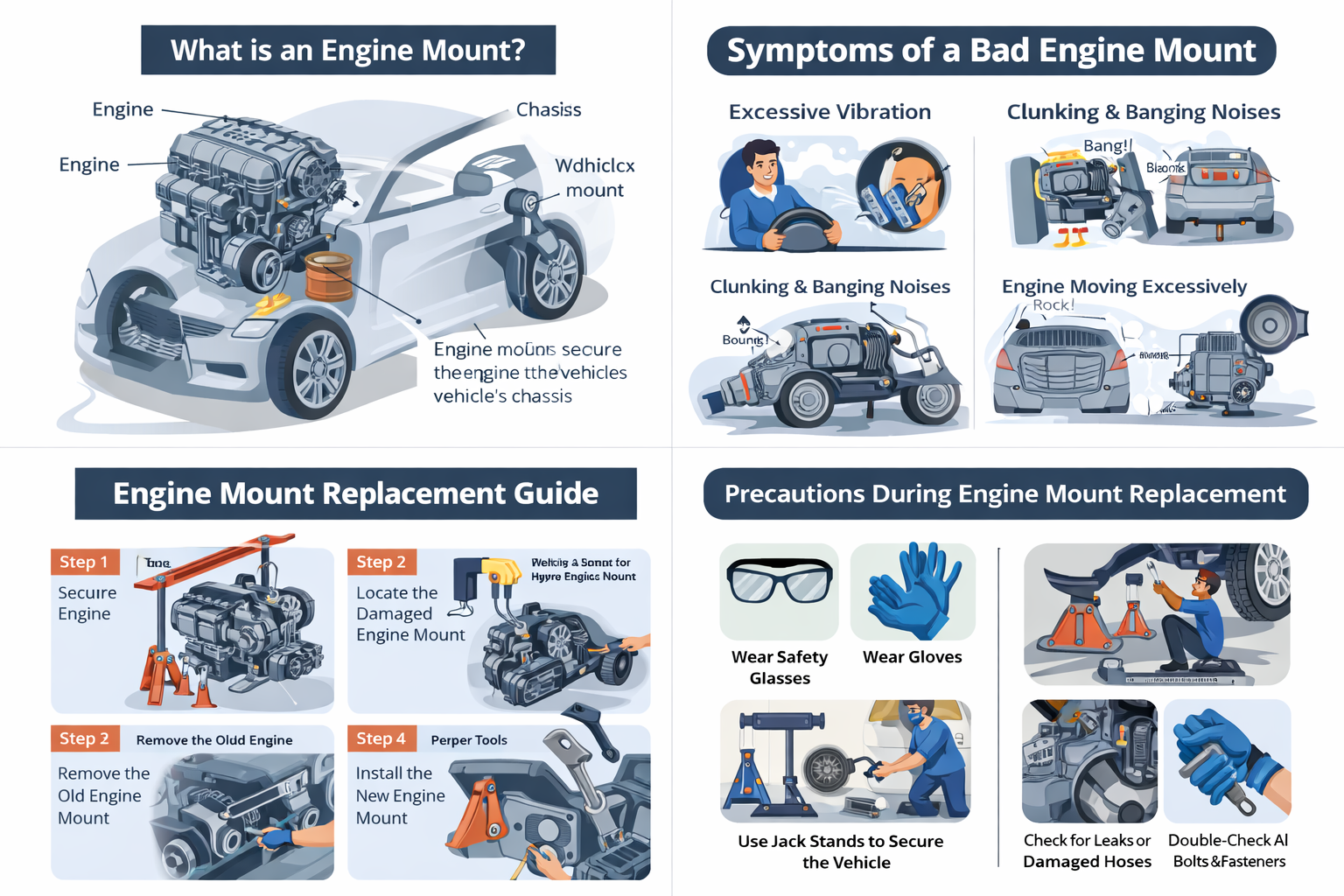

Engine mounts are critical components in any vehicle. They secure the engine to the vehicle’s chassis and absorb vibrations produced during engine operation. Most modern vehicles use a combination of rubber and metal mounts, and in some cases hydraulic mounts, to ensure smooth performance and reduce vibration inside the cabin.
Over time, engine mounts wear out due to constant exposure to engine vibration, heat, oil contamination, and mechanical stress. When an engine mount fails, it can lead to excessive engine movement, unusual noises, and reduced driving comfort. Identifying a faulty engine mount early can prevent further damage to surrounding components.
One of the most common signs of a failed engine mount is excessive vibration. When the rubber inside the mount deteriorates, it can no longer absorb engine vibrations effectively. As a result, the driver and passengers may feel stronger vibrations in the steering wheel, dashboard, or floor of the vehicle, especially while idling.
Another clear indicator of a damaged engine mount is unusual engine movement. If the mount becomes loose or broken, the engine may shift more than normal during acceleration, braking, or gear changes. In severe cases, the engine may visibly move when the hood is opened and the throttle is applied.
Clunking or knocking noises coming from the engine bay can also signal a failing engine mount. When the mount can no longer hold the engine firmly in place, metal components may come into contact during movement, producing noticeable sounds during acceleration or when driving over bumps.
Drivers may also notice misalignment of engine components. Because the engine is no longer held securely, connected parts such as hoses, belts, or exhaust components may shift slightly. This can sometimes lead to additional issues such as damaged hoses or premature wear of nearby parts.
A visual inspection is another effective way to diagnose a faulty engine mount. Mechanics typically check for cracked rubber, separated metal brackets, leaking hydraulic fluid (in hydraulic mounts), or mounts that appear compressed or broken. Any of these conditions usually indicate that the mount needs replacement.
Garages and technicians often perform a load test to confirm mount failure. During this process, the vehicle is placed in gear while the brake is held firmly, allowing the technician to observe how much the engine moves. Excessive movement during this test usually confirms a damaged mount.
It is also important to ensure that replacement mounts are compatible with the vehicle’s original equipment specifications. OEM-compatible engine mounts are designed to match the exact dimensions, material composition, and load requirements of the vehicle. Using the correct mount ensures proper engine alignment, vibration control, and long-term durability.
In summary, the most common symptoms of a failed engine mount include excessive vibration, engine movement, clunking noises, and visible damage during inspection. Regular inspection and timely replacement of worn mounts help maintain driving comfort, protect engine components, and ensure safe vehicle operation.